Acrylic on Canvas: Matter, Gesture and Overflow
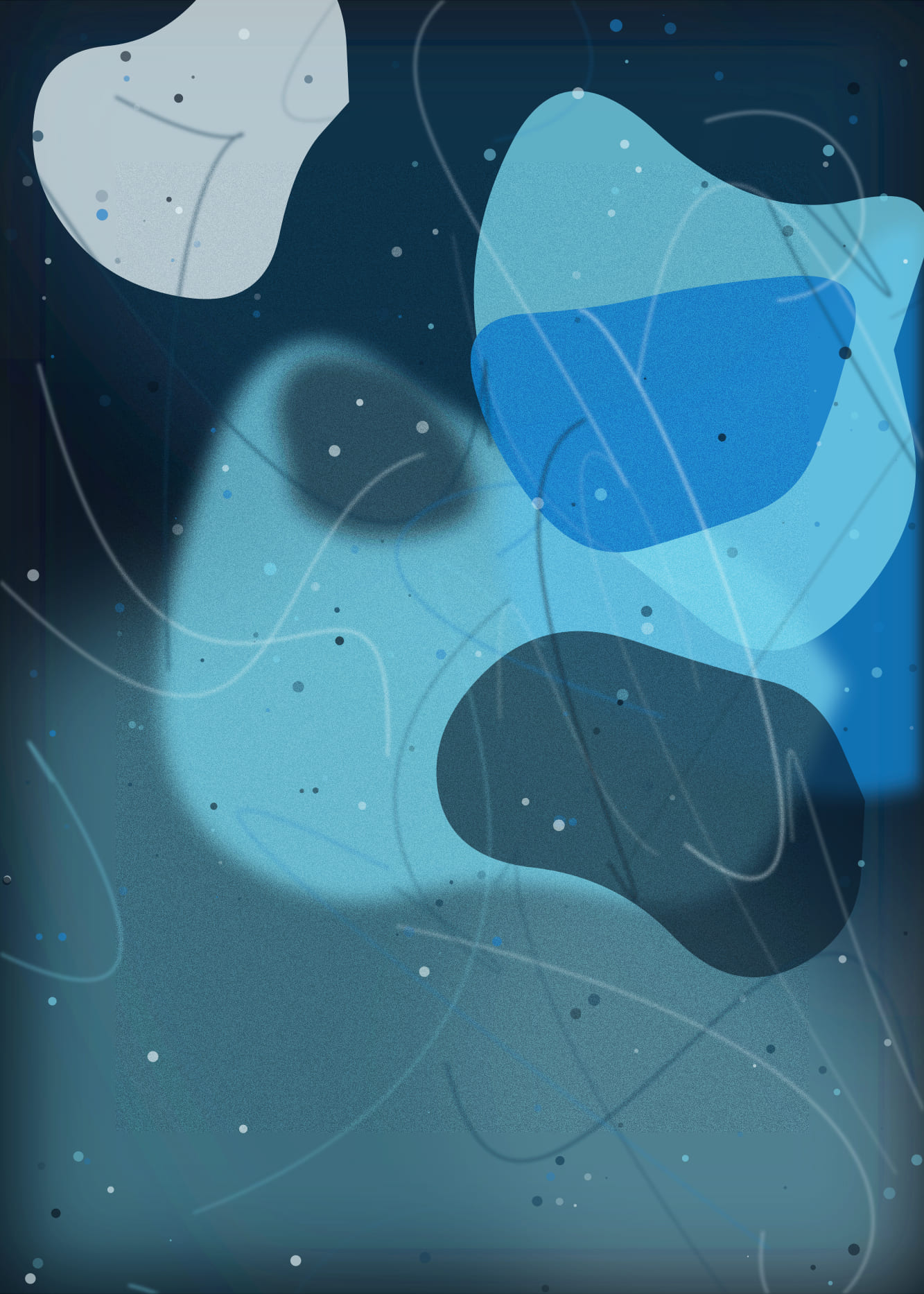
Every painting begins as a negotiation with a surface that refuses to stay still. In this exhibition, Ari Valdés puts acrylic paint in motion and then steps back, letting weight, viscosity and slope finish what the hand has only started. What remains on the canvas is less an image than a record: the trace of an event that could not be repeated.
The title names three forces. Matter is the paint itself, thick, translucent or stubbornly granular, always carrying its own temperament. Gesture is the brief human intervention that tilts, pours or drags. Overflow is what happens when neither one is in full control, and the colour slips past the edge of the intended form.
The works gathered here span the last six years, a period in which the stain stopped being an accident to be corrected and became the subject. Large blooms of crimson and umber spread across the canvas and halt at the exact point where the pigment dries, leaving contours that no brush could have drawn on purpose.
There is a patient attention to time in these surfaces. A layer is poured, left to settle for days, then crossed by a second layer that reacts to the first. Edges crack, pigments separate, small craters open where air escaped. Each of these events is kept, because the painter understands them as decisions made by the material.
The palette moves between earth and flame. Iron reds, burnt siennas and chalky whites dominate the early rooms, while the later canvases admit a cold cobalt that cuts through the warm masses like a draught. Colour behaves here as weather does: it gathers, thickens, breaks and clears.
To look at these paintings is to reconstruct a sequence. The viewer tracks a drip back to its source, follows a pool to the rim where it stopped, and in doing so repeats the movements of the making. The canvas becomes a small landscape of cause and consequence, readable from a distance and rewarding up close.
Chance is often described as the opposite of intention, yet the practice on view suggests something subtler. To allow a stain to happen requires preparation: the choice of ground, the dilution of the paint, the angle of the stretcher. The accident is invited, and then respected.
The gesture in these works is rarely a stroke. It is a tilt, a pour, a pause. Ari Valdés speaks of painting as a form of listening, of waiting for the pigment to show where it wants to go. The result is a body of work that feels at once monumental and intimate, forceful and quiet.
The exhibition closes with a group of smaller panels in which the overflow is almost contained, as if the paint had learned the limits of its frame. They offer a pause after the large rooms, and a reminder that the most open gesture still depends on a boundary to push against.